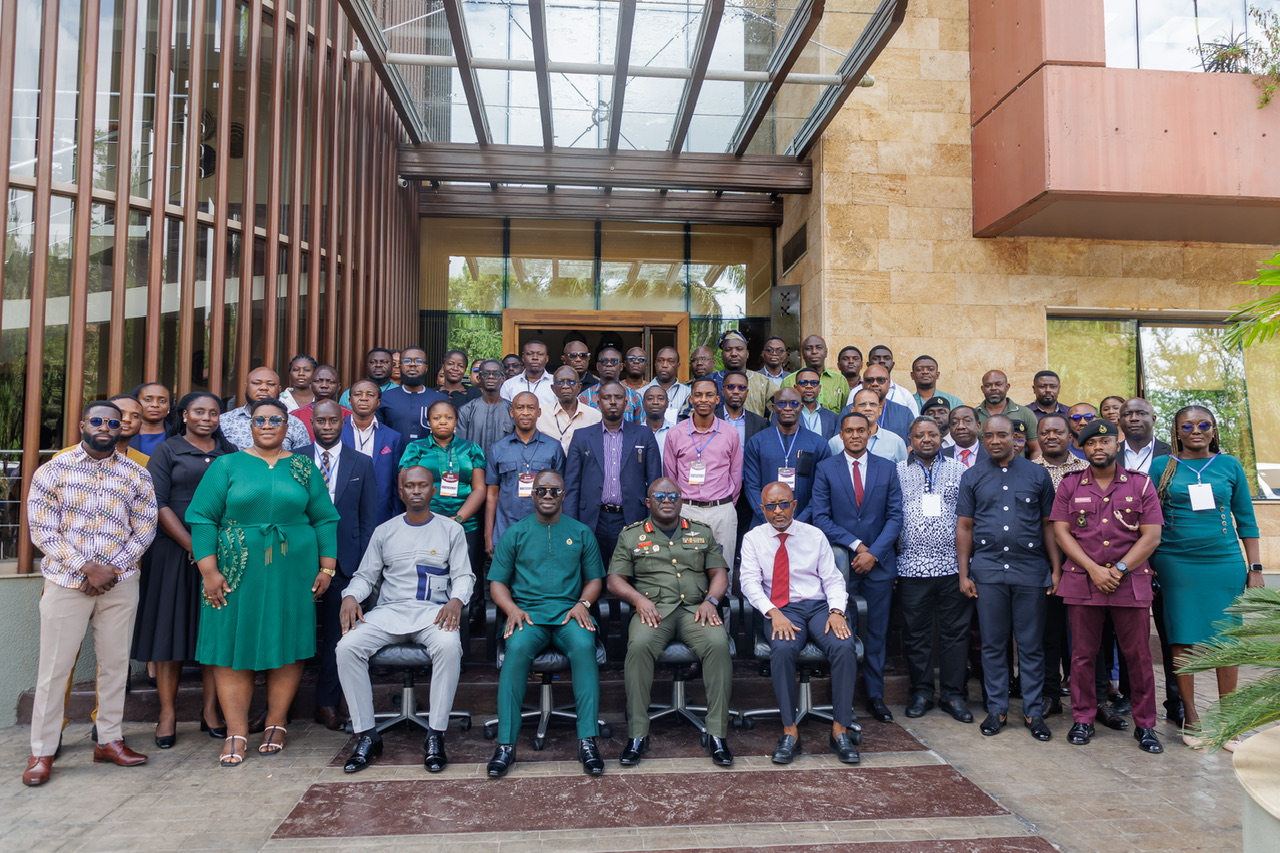




The Narcotics Control Commission (NACOC) has engaged sixty (60) key leaders in Ghana’s pharmaceutical industry in a high-level seminar aimed at strengthening systems, integrity, and collaboration in the monitoring of controlled substances.
The meeting, held at the Peduase Valley Resort, brought together sixty (60) Chief Executive Officers and Managing Directors from across the pharmaceutical sector. The discussions focused on enhancing regulatory compliance, closing systemic gaps, and safeguarding the supply chain against diversion and misuse.
In his opening remarks, the Director-General of NACOC, Brigadier General Maxwell Obuba Mantey underscored the dual nature of controlled medicines and precursor chemicals. He noted that while these substances are indispensable to healthcare delivery and legitimate medical use, they also pose significant risks when not adequately monitored.
“Controlled medicines and precursor chemicals are essential to healthcare and legitimate protection,” he said. “At the same time, when they are not properly monitored, they can be diverted and misused, with serious consequences for public health and safety.”
He emphasized that the seminar was not merely a platform for discussing compliance, but an opportunity to critically examine the strength of existing systems and the level of collaboration among stakeholders.
“This is not just about conversations on compliance,” he added. “It is about how strong our systems are and how well we are working together to close the gaps that can be exploited.”
The Director-General further reminded participants that NACOC, established under Act 1019, continues to strengthen Ghana’s national response to narcotics control challenges. However, he stressed that legislation alone is insufficient without effective implementation and cooperation.
“We all know that laws and regulations on their own are not enough. What matters is how effectively we implement them and how well institutions and industry work together in practice,” he stated.
Also addressing the gathering, the Deputy Director-General in charge of Enforcement, Control and Elimination, Lawyer Alexander Twum-Barimah, highlighted the operational realities confronting regulators. Drawing from firsthand experience, he pointed to regulatory gaps, weak monitoring systems, and poor documentation as key vulnerabilities within the pharmaceutical supply chain.
He warned that such weaknesses create opportunities for illicit drug networks to infiltrate legitimate channels.
“These vulnerabilities within legitimate supply chains are often exploited by illicit drug networks,” he said. “That is why strong internal controls within the pharmaceutical sector are vital.”
Participants at the seminar engaged in discussions on best practices, risk mitigation strategies, and ways to enhance transparency and accountability across the industry. The event forms part of NACOC’s broader effort to foster public-private partnerships in combating drug-related crimes and ensuring the safe handling of controlled substances in the country.
The Commission was optimistic that collaboration with industry leaders will significantly reduce the risks of diversion and contribute to improved public health and safety nationwide.